

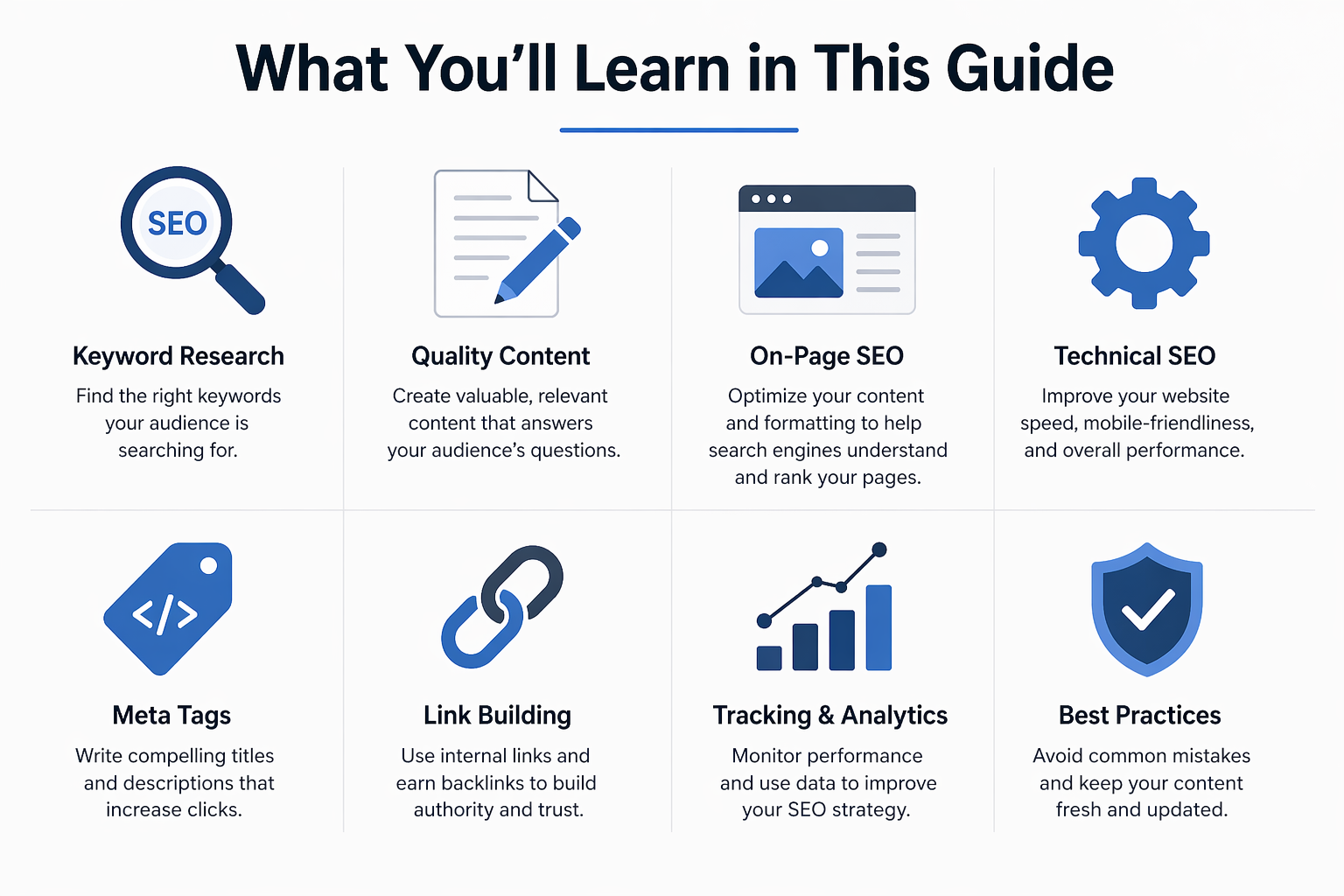
Introduction to SEO-Friendly Content
Let’s be honest for a second
You can create amazing products, beautiful designs, or even the best digital downloads and still struggle to get sales if nobody can find you.
That’s where SEO comes in.
SEO-friendly content simply means creating content that both people and search engines understand. When done right, it helps your website show up on Google when someone is actively searching for something you offer.
Instead of chasing customers, SEO helps bring them to you.
In this guide, we’re going to break down exactly how to create content that not only connects with your audience but also gets seen, clicked, and ranked.
What is SEO and Why It Matters
SEO (Search Engine Optimization) is the process of helping your website appear higher in search results.
But let’s simplify that
When someone goes to Google and types something in, SEO is what helps your content show up instead of someone else’s.
And this matters more than people realize.
Because the higher you show up, the more people see you.
The more people see you, the more clicks you get.
And more clicks = more opportunities to make money.
Another big reason SEO matters is because it builds trust.
People naturally trust what they see on the first page of Google. So when your content ranks higher, your brand automatically feels more credible even if they’ve never heard of you before.
And unlike ads, where traffic stops the moment you stop paying SEO keeps working over time. One good piece of content can bring you traffic for months or even years.
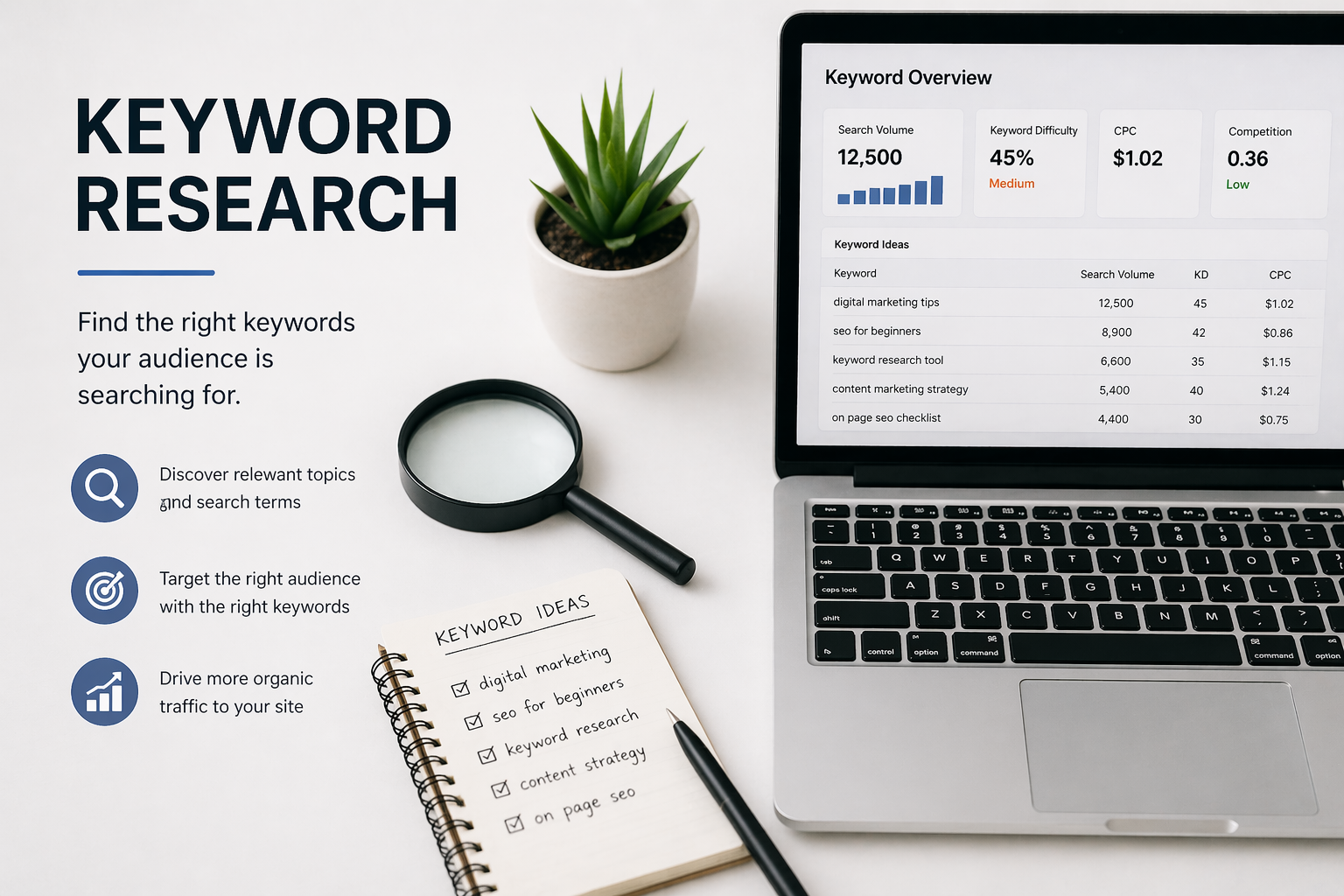
Keyword Research
Before you create anything, you need to know what people are actually searching for.
This is where keyword research comes in.
A keyword is simply a word or phrase someone types into Google. For example, someone might search “how to start a digital product business” or “planner ideas to sell on Etsy.”
If your content includes those phrases in a natural way, your chances of showing up increase.
A lot of people make the mistake of creating content based on what they want to talk about. But SEO is about creating content based on what people are already looking for.
The more specific your keyword is, the better.
For example, instead of just saying “planners,” something like “best planners for beginners” is more targeted. That means the person searching is clearer on what they want, and more likely to click your content.
Think of keyword research as listening before speaking.
You’re finding out what people need, then creating content that answers it.
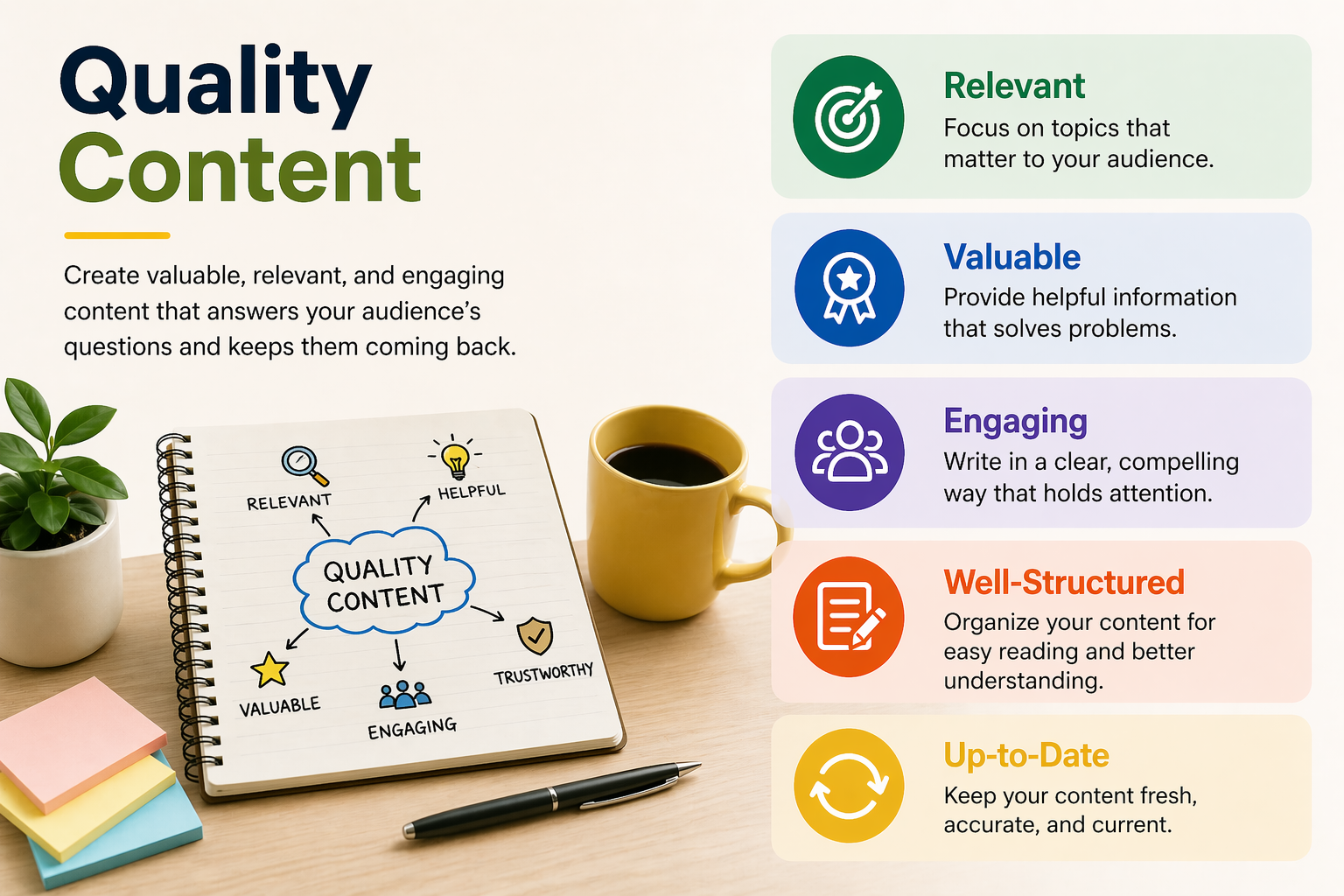
Creating High-Quality Content
Once people find your content, the next step is keeping them there.
This is where quality matters.
Search engines pay attention to how people interact with your content. If someone clicks your page and leaves right away, that signals that your content wasn’t helpful.
But if they stay, read, scroll, and engage, it tells search engines your content is valuable.
High-quality content doesn’t mean complicated or fancy.
It simply means:
- Clear
- Helpful
- Easy to understand
- Focused on solving a problem
Your goal should be to answer one main question really well instead of trying to cover everything at once.
When your content feels useful and relatable, people stay longer, trust you more, and are more likely to come back.
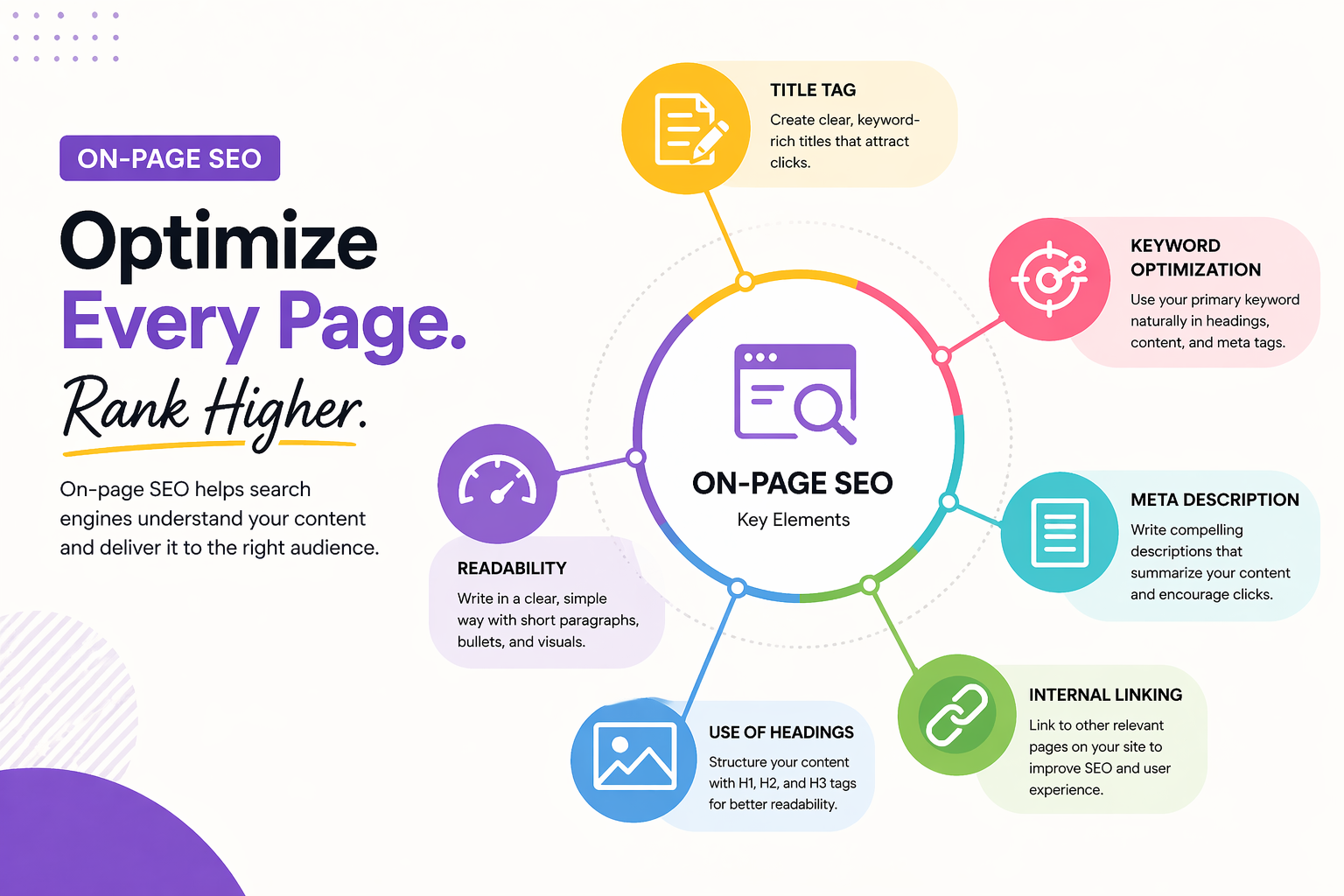
On-Page SEO & Formatting
Now let’s talk about how your content is structured.
Even the best content won’t perform well if it’s hard to read.
On-page SEO is all about organizing your content so both people and search engines can understand it easily.
This includes using headings like H1, H2, and H3 to break up your content into sections. These headings act like a guide, helping readers quickly scan and find what they need.
It’s also important to naturally include your keywords throughout your content, especially in your title and headings, without overdoing it.
Short paragraphs, clear sections, and easy-to-read formatting make a big difference.
Think about how you read online.
You don’t read every word, you scan.
Your content should be built for that.
Technical SEO Basics
This might sound like the complicated part, but it’s actually pretty simple.
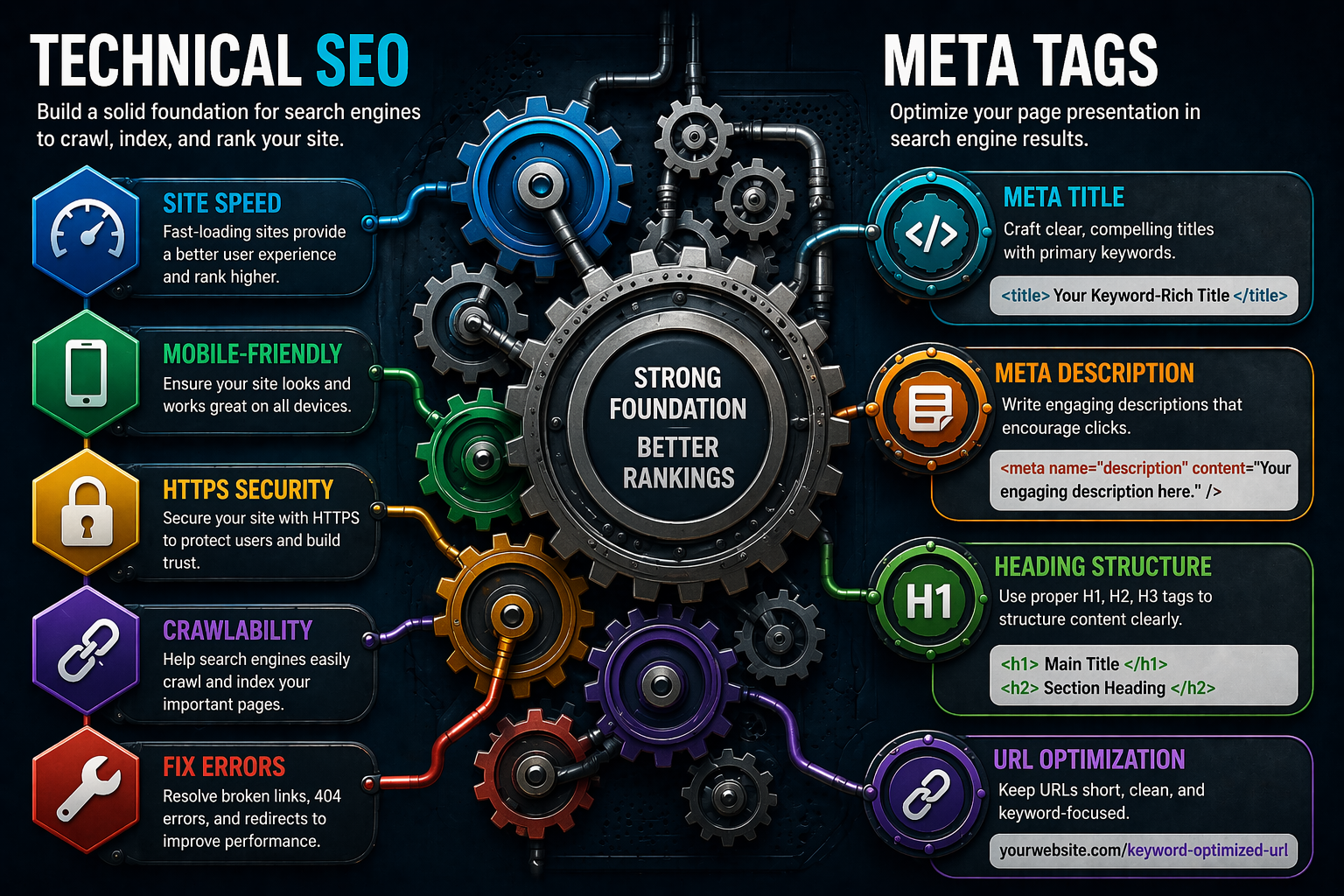
Technical SEO is just making sure your website works properly behind the scenes.
If your site is slow, hard to use, or doesn’t load properly, people will leave, and search engines will notice.
At the basic level, you want to make sure:
- Your website loads quickly
- It works well on mobile devices
- It’s secure (you’ll see “https” in your URL)
- There are no broken links or errors
You don’t need to be a developer to handle this.
You just need your website to run smoothly and feel easy to use.
Meta Tags and Descriptions
Before someone clicks your website, they see a preview on Google.
That preview is made up of your title and description, also known as meta tags.
This is your chance to grab attention.
If your title is vague or boring, people will scroll right past it.
But if it’s clear and speaks directly to what they’re looking for, they’ll click.
For example, instead of a general title, you want something specific and helpful.
Your description should also give a quick idea of what they’ll get if they click.
These small details might seem minor, but they can make a big difference in how many people choose your content over someone else’s.
Internal and External Linking
Links help connect your content and improve the experience for your reader.
Internal linking means linking to other pages on your own website. This helps guide people through your content and keeps them on your site longer.
External linking means linking to other helpful or credible sources. This adds value and shows that your content is well-supported.
Then there are backlinks — when other websites link to your content. This is a strong signal to search engines that your content is trustworthy.
The more connected and useful your content is, the stronger your website becomes overall.
Building Authority with Backlinks
Backlinks are one of the biggest ways to build authority online.
When other websites link to your content, it’s like they’re vouching for you.
It tells search engines, “this content is worth paying attention to.”
You can build backlinks by:
- Writing guest posts for other websites
- Collaborating with people in your niche
- Creating content that people naturally want to share
The more quality backlinks you have, the more your content is seen as reliable, and the better it can rank.
Tracking and Improving SEO
Tracking and Improving SEO
SEO is not something you do once and forget about.
It’s something you build and improve over time.
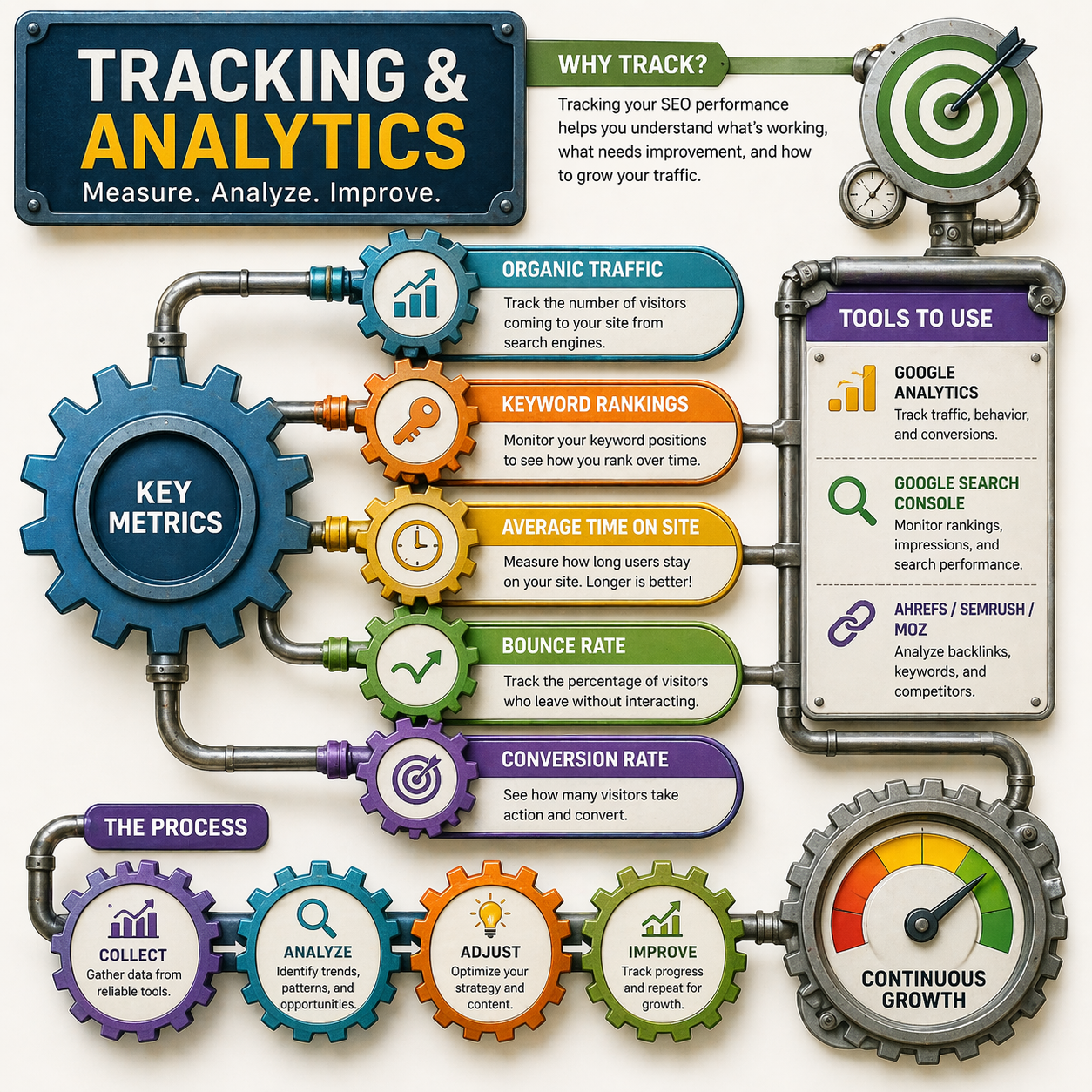
By tracking your content, you can see what’s working and what’s not.
For example, you can check:
- How many people are visiting your site
- Which keywords are bringing traffic
- How long people stay on your pages
This helps you make better decisions moving forward.
Instead of guessing, you’re improving based on real data.
Use tools like:
-
Google Analytics → track traffic
-
Google Search Console → monitor rankings
-
Ahrefs or Moz → analyze performance
Watch key metrics:
-
Organic traffic
-
Keyword rankings
-
Time on site
-
Bounce rate
Common SEO Mistakes to Avoid
A lot of people struggle with SEO because of simple mistakes.
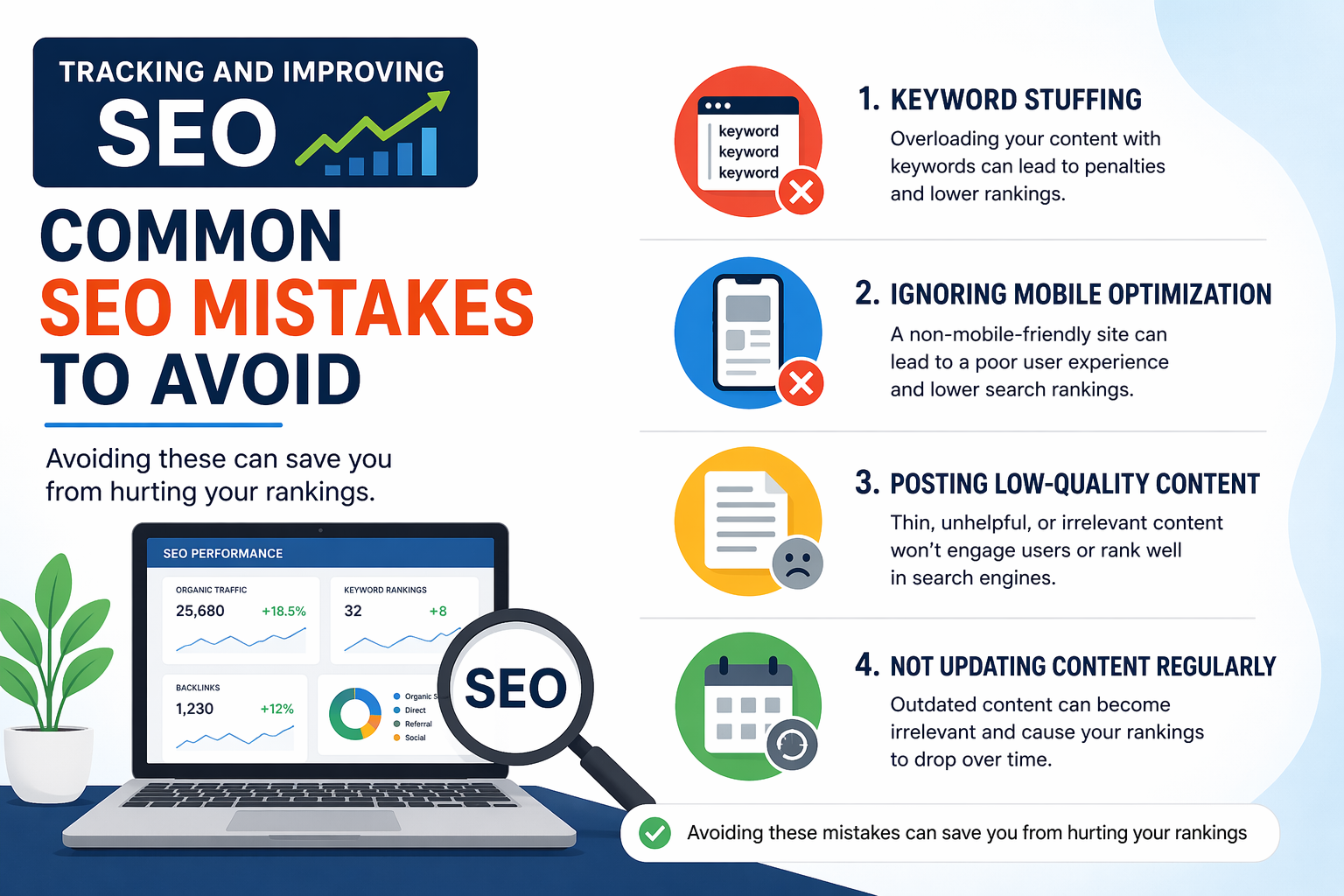
One of the biggest ones is trying to force keywords into every sentence. This makes content feel unnatural and actually hurts performance.
Another mistake is ignoring mobile users. Most people are browsing on their phones, so your content needs to look good and function well on smaller screens.
Posting low-quality or rushed content can also hurt your results. SEO rewards value, not volume.
And finally, many people give up too soon.
SEO takes time, but when it starts working, it works consistently.
-
Keyword stuffing
-
Ignoring mobile optimization
-
Posting low-quality content
-
Not updating content regularly
Avoiding these can save you from hurting your rankings.
Regular Updates and Maintenance
Content is not something you create once and forget about.
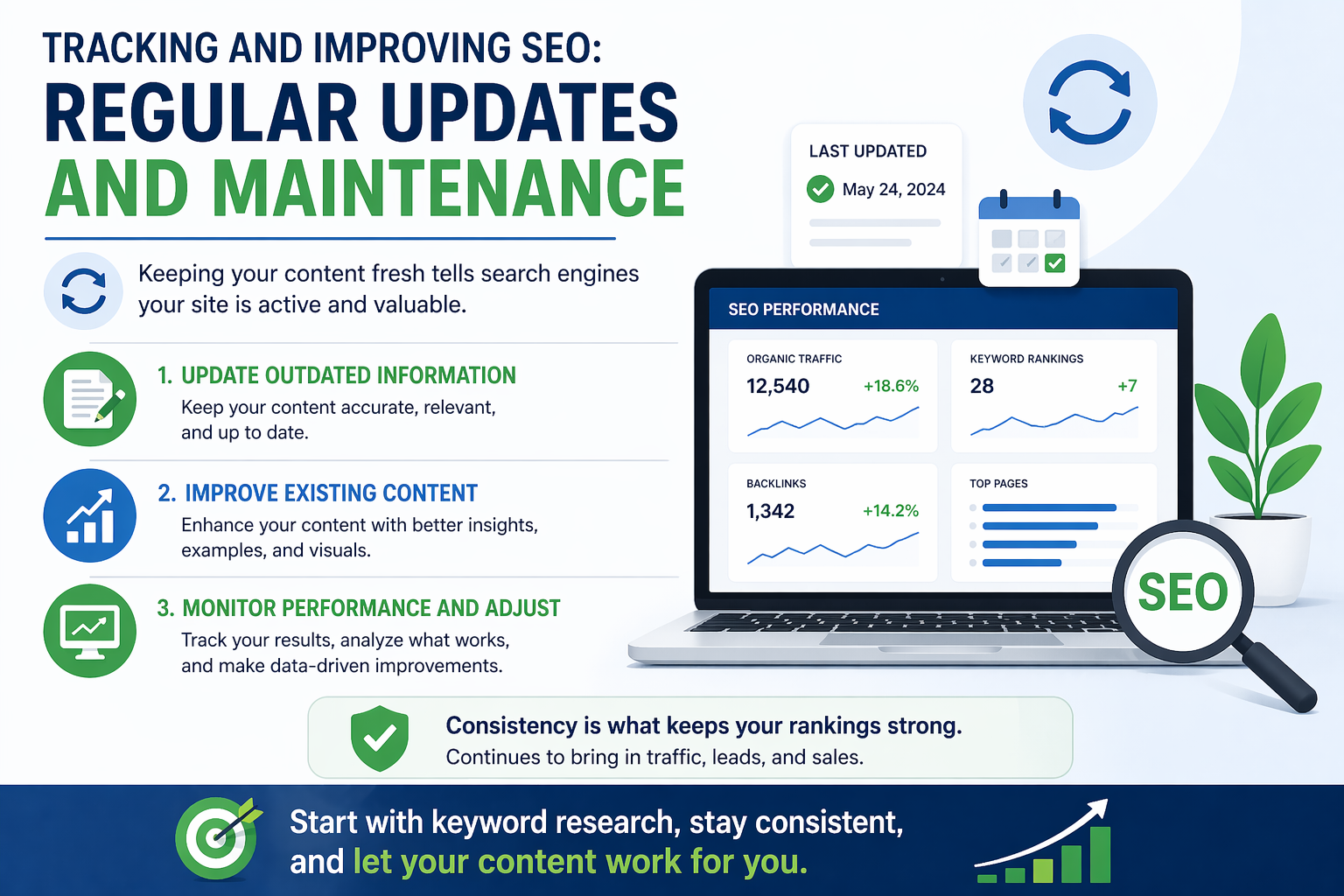
Search engines like fresh, updated information.
That means going back to your older content and improving it when needed.
You can:
- Update outdated information
- Add more value
- Improve readability
- Optimize keywords
This helps your content stay relevant and continue performing over time.
Conclusion: Grow Your Business with SEO
SEO is one of the most powerful ways to grow your online business long-term.
It allows you to attract people who are already looking for what you offer, without constantly relying on ads or chasing attention.
When you understand your audience, create valuable content, and optimize it the right way, you’re building something that works for you over time.
Start simple.
Pick one topic.
Find one keyword.
Create one piece of content.
And keep going.
Because once SEO starts working
it doesn’t just bring traffic, it builds momentum.


